How To Start A Best Scientific Journal | Rule for the structure of a scientific journal

If you going to think of starting a scientific journal for the publication of scientific writing and helping others in the publication

in this article, we are going to write and discuss the few steps which are used before the start of a journal, and if you use this strategy you can easily start your journal on own

if find any difficulty email is for support

In conclusion, all the information and tips that are discovered after the critical review and literature analysis are used to find the eye that is used for the Scientific journal start.

Why humankind has been able to enjoy the realities of modern life due to the advancement of science and technology, new innovation, and the best scientific journal for publication, with the arrival of this advancement, mankind has learned to understand the universe to some extent.

If it were not for the scientist and researchers’ discoveries that have taken place since Aristotle’s day, most of the things in modern life, such as smartphones and computers, would not be designed.

All these scientific developments have been familiar to future generations through the use of scientific journals.

Read: What’s a Journal and Types of best Research Journal

What’s a scientific journal

A scientific journal is a collection of text like a magazine containing various scientific papers written after proper research.

Many scientists and researchers use suitable scientific journals to publish their work in the form of a 5 to 30-page scientific paper and other scientists and researchers working in the same field may also refer to that specific scientific paper, to see whether this research can stand better.

For this reason, one benefit of publishing a scientific paper is trademarking your research work before anyone else, and a second benefit is helping to build on existing knowledge and it became a window for new researchers and workers the improvement of their research by using these paper published in that particular journal.

Read: What’s a Journal and Types of best Research Journal

The rule for the structure of a scientific journal

Before you can decide to make your own scientific journal or professional journal. The creation of a scientific journal is a complex process, requiring that the journal be planned and structured in a systematic way.

First, a scientific journal should have a good, impartial editorial board.

This is very important, as the editorial board should supervise the process of submitting science papers and it should control the double peer-review process of these scientific papers.

Read: Find Reviewer For Research Paper

Moreover, the process of editorial review should be clear to the scientific community at the earlier, when the scientific journal is first established. So, when you start your science journal, you should contact reputable colleges that can help you set up your editorial board.

Once you have selected the editorial board, you should also set the standards you will accept as a science paper viz. Publication frequency, ethical policy, a guideline for the author, peer review policy, publication policy, and article submission of the paper.

Read: Research Journal Metric to Understand the Journal Criteria for Paper Submission

For example, do you need a computer simulation in your technical magazine or do you want the analytical studies to be published? As another example, do you need to see proof of testing before approving the publication of a research paper or will it be enough to have statistics without proof?

When you create your science journal, these methods should be evaluated by your editorial board, so that the appropriate reviewers can be selected to perform the process.

The submission process for the scientific journal

An established science journal should have an automated submission system. It is important to create a system that allows for a paper submission process that is unbiased, automated, and systematic process.

There is software that allows you to publish your science journal online and some professional help will be compulsory to install journal software.

Read: Research Journal Metric to Understand the Journal Criteria for Paper Submission

Most of the journals use automation software available online is open-source software, so it is important to choose one that has a small number of bugs in it.

Read: Best Free Reference Managing Software and Citation Tools for Automatic Referencing

You may want to try a few science journal submission programs before deciding which is best for your journal. You can also use the email process for the manual submission of a research paper.

Registration of scientific Journal

A recently published scientific journal or technical journal must have an ISSN number, which will be the journal’s worldwide subscription number.

It’s completely free to get an ISSN number and you can get it online from the ISSN international site.

So, once you’ve established your editorial board once you’ve got your ISSN number; and with the help of your science journal publishing software, your science journal will be ready for immediate publication.

In this way, your published journal can also serve as a beacon of information to the scientific community worldwide.

Read: What is an ISSN number and why is it important

Wrapping Up

This is all about this article and hopes these tips help you to start a scientific journal in the future, KRS is an academic cum online learning platform, which brings new-fangled material for their learners from time to time, to stay connected.

Please share and subscribe to our website, so that it can reach all needy persons for other E-content of research solutions you can find at KRS and you can also email info@kressup.com to us for a free consultation on creating your science journal.

If you like this article don’t first share it with other

Related articles:

General FAQ related to Scientific Journal

Q 1. What is a scientific journal

Scientific journals disseminate and popularize scientific findings, advances, and results.

Q 2. Can we publish a paper in a scientific journal

Yes, you can read the author’s guidelines before paper’s publication

Q 3. Scientific journal is free or paid

Both depend upon the publisher’s policy

Q 4. Scientific journal is free or paid

It is common for journals to charge significant fees for papers, but sometimes they used to publish for free and cover the costs.

What is a multidisciplinary Journal | Best multidisciplinary journals for publication

If you are a research scholar, teacher, or student and searching for the Best multidisciplinary journal for publication

There is no doubt that you have come to the right place. This is because in this article we are going to give you a list of 20 of the most reputable multidisciplinary journals for publication.

All of these journals are reputed journals and are indexed by reputable agencies such as SCI, Scopus, and UGC-CARE

You can publish any of your papers in these journals, and it is easy to choose the journal, read the guidelines, and submit your paper for publication

The guarantee we provide is that you will never look anywhere else for your journal search. However, if you find any difficulties with your publication please let us know by email

What is a multidisciplinary Journal

A Journal that publishes research papers from various areas of research is called a multidisciplinary Journal.

These are the research, peer-reviewed, open access, and scientific scholarly journal which publish research papers, review papers, case studies, short communications, and other research work from diverse backgrounds ranging from science to art subjects. 

The multidisciplinary journal is a multi-domain journal and if you want to know how many topics and what types of topics can be covered by a particular Journal just search journal name or ISSN on the Google search engine and click on the aim and scope of the journal section.

Read: What is an ISSN number and why is it important

Why a multidisciplinary journals

Multidisciplinary journals are multi-indexed journals that publish research papers very fast and these journals consider articles related to any domain and subject now author needs not worry about the scope of the journal without wasting time to find out a suitable journal for his/her publication. 

Read: How to choose a suitable journal for your publication 

But you will know about the particular ISSN number print version and online version, abstracting, and indexing of journal for this, you can check each of these journals and validate that this particular journal is on different databases and confirm whether they have rich indexing and abstracting or not. 

For more updates and information about these journals, you can type each of these on SJR Scimago Journal & Country Rank.

You are always targeting the UGC-CARE journal, SCI index journal, and Scopus category multidisciplinary Journal because all the categories are noble quality journals.

Read:

20 Best multidisciplinary journals for publication

All the journals discussed in this article are Web of Science, Scopus index, and UGC-CARE list journals having good impact factors.

For more updates about abstracting & indexing you will redirect to the abstract indexes section of the journal and note that can this Journal belongs to the web of science category or Scopus category, SCI category, and PubMed, etc

  1. International Journal of service science management engineering and technology (19479603, 1947959X) publishes high-quality research articles in all fields of computer science information technology, operations research, management science marketing applied mathematics, statistics policy analysis, economics, natural sciences, medicine and psychology, and site score of this journal is 1.8, the publication frequency is bi-monthly
  2. World review of science technology and sustainable development (17412242, 17412234) this journal addresses issues related to sustainable development goals acting between sustainability science and technology the site score of this journal is 0.9 and the publication frequency is quarterly.
  3. Metode science studies Journal is a multidisciplinary journal (ISSN 2174-3487 – eISSN 2174-9221) it is a peer-reviewed journal that publishes original research on analysis on current research and science communication they accept articles on all fields of science the site score of this journal is 0.4 and the publication frequency of this journal is yearly.
  4. Maejo international journal of science and technology (19057873) is a journal that accepts articles on physical sciences, earth sciences, life sciences, agricultural sciences, and related technology including engineering the site score of this journal is 0.8 and the publication frequency of this journal is three issues per year.
  5. Songklinakarin journal of science and technology (01253395) includes current knowledge and advances in science and technology areas covered are agricultural and biological sciences biotechnology and agro-industry chemistry and pharmaceutical sciences engineering and industrial research environmental and natural resources and physical sciences and mathematics the site score of this journal is 0.5 and publication frequency of this journal is quarterly.
  6. International Journal of agile systems and management (17419174, 17419182) focuses on agility responsiveness competitiveness, and management of systems it highlights systems specified designed controlled implemented commissioned operated serviced, or maintained with human and societal requirements in mind the site score of this journal is 3.0 the publisher of this journal is in the science publication frequency is quarterly.
  7. Applied network science (23648228) is open access and the focus is on novel anticipated applications of network sciences and related techniques, applications of complex networks, methodologies, and innovative modeling approaches that will enhance specific applications of network science concepts the site score of this journal is 1.5 and the publication frequency is monthly.
  8. Science advances (23752548) is open access multidisciplinary journal publishing research papers and reviews in any area of science in both disciplinary-specific and broad interdisciplinary areas, the site score of this journal is 25.2 and the publication frequency of this journal is monthly.
  9. Proceedings of the Latvian Academy of Sciences (1407009X) covers natural exact and applied sciences the journal also publishes information on events pertaining to science life such as biological sciences medical sciences environmental sciences geography geology forestry agriculture mathematics and others the site score of this journal is 0.6 and publication frequency is bi-monthly.
  10. Philippine Journal of Science (00317683) is a peer-reviewed multidisciplinary journal this journal aims to report the advancements in science and technology the site score of this journal is 0.6 and the publication frequency of this journal is quarterly
  11. PLOS one (19326203) is a public library of science is a multidisciplinary journal targeting advanced science for the benefit of society it is an open-access journal that publishes research articles covering more than 200 subject areas it covers science engineering, medicine, and social science, humanities, and interdisciplinary areas the site score of this journal is 5.2 and the publication frequency of this journal is quarterly
  12. Journal of advanced research (20901232) is a Scopus and SCI indexed Journal that covered the area of medicine, pharmaceutical, dentistry, physical therapy veterinary medicines, and many more topics, if your research area comes under these particular types of the category you can publish your research article in this particular Journal.
  13. Heliyon (24058440) is an all-science open-access journal that is part of the cell press family any paper reporting scientifically accurate and valuable research which follows ethics and scientific publishing standards will be considered for publication the site score of this journal is 1.2 and the publication frequency is monthly.
  14. Science technology and society (0971-7218, 0973-0796) is a multi-disciplinary peer-reviewed journal that encourages analysis of a variety of disciplines such as history, sociology, philosophy, economics, political science, and international relations science policy involving innovation foresight studies involving science and technology management environmental studies energy studies, and gender studies the site score of this journal is 1.5 and the publication frequency is three issues per year.
  15. Arabian journal of science and engineering (21914281, 2193567X) cover the original contribution of science disciplines of Biological Sciences, Earth sciences, chemistry, physic, and all engineering displaces, the indexing and abstracting of this journal come under the category UGC-CARE listed, SCI  citation and  Scopus and publication frequency is monthly, etc.
  16. European journal of science and technology (18410464, 18428517) accept original paper, short communication, and reviews on a broad range of topics of interest from arts and humanities, all branches of science It is a web of science category indexing Journals and the publication frequency is quarterly.
  17. Journal of the royal society of New Zealand (03036758) is a multidisciplinary journal that comes under the category of the web of science citation index and Scopus category and publication frequency is quarterly.
  18. Journal of Mountain Research (0974-3030) is an international Web of Science index journal that covers physical and natural science including Biotechnology, Botany, Chemistry, Environmental Science, Geography, Geology, Mathematics, Microbiology, Physics, Zoology, and any specific contribution on the mountain region and the publication frequency is two issues per year.
  19. Psychotherapy and politics international (1556-9195) is an international journal that explores interactions between politics and psychotherapy both in theory and in practice it focuses on political problems that originate in psychotherapy and equally on the application within the field of psychotherapy of political concepts and values the site score of this journal is 0.5 the publisher of this journal is Wiley Blackwell and the publication frequency of this journal is three issues per year
  20. Indian Journal of science and technology (09746846, 09745645) is a web of science index journal covering all areas of science and technology and natural sciences, life sciences, applied sciences and many more the site score of this journal is 0.8 and the publication frequency of this journal is weekly.

All these multidisciplinary journals we have discussed in this article are good indexed journals having good site scores and impact factors.

In the quick publication process, few of them are free journals and few are paid, researchers can get good recognition if they publish their research articles in these journals.

Wrapping Up

This is all about this article and hopes this list of 20 multidisciplinary journals helps you in your research paper published in your research career or the future thanks so much for reading this article and hope this article is useful for you, please share and comment, so that it can reach all the researchers.

KRS is an online learning platform, which brings novel articles from time to time, and stays connected.

Please share and subscribe to our website, so that it can reach all people in need, and for more E-content, for research support, you can find it on our website or you can also write us at info@kressup.com for a free consultation.

 If you like this article, please share it with others

Related articles:

General FAR related to multidisciplinary Journal

Q 1. What do you mean by multidisciplinary Journal

A multidisciplinary journal is one that publishes research papers from a variety of fields of research, thus being called a multidisciplinary journal.

Q 2. Can we publish paper freely in

Yes, if journal is free

Q 3. What interdisciplinary journal

Interdisciplinarity analyzes, synthesizes, and harmonises the content between disciplines

What’s a Journal and Types of best Research Journal

If you are a researcher or if you are involved in a scientific field, it would be worthwhile to hear the words journal or research journal.

The purpose of this article is to provide a brief overview of the different types of journals used in research.

If you are familiar with the type of journal used in your field, then it will be easier for you to submit your paper for publication in it.

The information and the date that has been used in this article have all been collected from a reliable source and have been arranged in such a way that you will be able to get as much benefit from it as possible.

If you find any difficulty with any research related to this post, please feel free to email us and we will be more than glad to assist you

What’s a Journal or Research Journal

Journal means research journal, and the types of a research journal can be decided by the contribution of authors and the members of the editorial boards of that particular Journal, but not by the publisher or by the area to which that journal belongs.

A journal is a form of magazine or research publication book that publishes research papers and archives them both online and offline for future reference.

A primary source of literature research records, such as the general ledger, can be found in this database.

Calling a ‘national’ or ‘international’ journal is a great thing! Most opines or any journal that can be published in India are called ‘international’. In other words, any journals published from any country other than India can be called ‘international’.

Few journals are published and printed in the local language considering local issues can be called the National Journal.

At the same time, an article with a wide-ranging and global impact is published in the Journal and is being circulated around the world and can be called an international publication.

Generally, there are three types of journals on the basis of author contribution and place of publication 

Read: 15+ Scopus/SCI Fast Publication Journals with No Fees

What’s a Local journal

The Journal is published by a publisher and the publisher may be an individual or university, institute, or any other organization, and the authors of this journal are from a specific area or region.

For example, a university-run journal and all university teachers and staff publish the research paper in that journal, such type of journal is called a local journal.

Or

If an individual starts a journal from a specific area and that area may be a district or a state and the authors of that journal are from that specific area only in this condition that type of journal is also called a local journal.

What’s a National journal

Is those journal published by any publishers across India and all authors from India can publishing their research papers in that journal such type of the journal called National Journal?

For example, some UGC-CARE list journals or some other journals related to any society, agency, or university, in which all authors of different institutes across India only can publish their papers in spite of a specific area or the university called the national journal.

Read: What’s UGC-CARE List journals | Best UGC-CARE Journals

What’s an International Journal

A journal is only called international if 67% of its author are from global institutions and also the editorial boards are from global institutions.

Don’t confuse it with this International name, sometimes most of the journals add international before its name. If one journal adds international before its name doesn’t go with that just observe the editorial board and the contribution of authors in that particular journal and then finalize that journal’s national or international.

In spite of that check the indexing of the journal, because some journals write the impact factor which is not genius. Only the web of science (WoS) can prove the reliable impact factor and no such agency has a copyright or authority to provide the impact factor, but some local indexing agencies can provide an impact factor but it is not reliable.

Read: What is the impact factor of the best journal in Research

Sometimes journal writes impact factor-like 4, 5 …6, etc. which is a much higher impact factor but it is not genius and you can check the impact factor provided by WoS only which is authentic. 

While checking the indexing note that all publishers provide you with the number of databases on their website and you need just click the link if the journal name is available on the website on that database, then only you can understand that this journal is indexed in that particular database.  

If the publisher is writing only the text in indexing, but that is not linked to the target website of the database, in this case, this is not the reliable source of the database and indexing is not reliable, avoid such types of Journal

Read: How to choose a suitable journal for your publication

Wrapping up

This is all about this article and hopes this information you in your selection of a journal at the time of research paper submission in a research journal,

KRS is an online learning platform, which brings novel articles from time to time, to stay connected.

Please share and subscribe to our website, so that it can reach all people in need, and for more E-content, for research support, you can find it on our website or you can also write us at info@kressup.com for a free consultation.

I would appreciate it if you shared this article with others if you found it useful

Related articles:

General FAQ Related to Journal and Types of best Research Journal

Q 1. Which journal is the best to journal

The only journal that has a well-defined peer-review process and is indexed in a good indexing agency

Q 2. Good indexing agency

Web of science, Scopus, UGC-CARE, SCI, JCR etc

Q 3. What is resarch journal

A research journal is a book containing articles written by experts and published in a reliable and authoritative source.

How to choose a suitable journal for your publication

Writing is a skill but publishing in a suitable journal is a key to success in scientific writing. It was noticed that many first-time authors write a paper for publication in an academic journal, but are not sure where to submit it or which journals should you consider and how do you pick the right one.

Considering that there are thousands of journals out there, this decision can seem daunting, especially to a first-time author.

In this article, I explain how to go about choosing an appropriate journal for your paper using few steps

Steps used in the selection of a suitable journal

Step 1. Preliminary list of  journal

The first step is to compile a preliminary list of journals that might be appropriate for your paper.

One option is to look at the literature cited in your manuscript and where those papers were published.

You can also conduct a search for papers in your field by using keywords from your research topic and note the journals in which they were published and in this way you should gather a good list of journals to start with.

You’ll likely have a mix of general interest journals with a wide readership and suitable journals with a smaller audience.

If your paper addresses a topic of broad interest, then you want to consider general interest journals, depending on other factors which I’ll get to in a moment.

If your paper, on the other hand, is highly technical and likely to be of interest only to specialists in the field, you should prioritize specialty journals.

Step 2. Check each journal requirement

Carefully read the aims and scope of each selected journal to make sure your paper fits. A mismatch between the topic of a submitted paper and the journal’s aim and scope is one of the most common reasons for rejection.

Often, the suitable journal will provide examples of appropriate topics that come under that journal For example see in the journal of Mountain research 

In addition, you want to make sure the suitable journal accepts your type of article, which might be an original research paper, a methods paper, a review paper, or a brief note.

Usually, suitable journals list the types of articles they will consider as shown here. If not, you can always inquire.

You also want to make sure you can meet other journal requirements such as page charges or word limits. For example, if you have a 16,000-word monograph, it will likely be rejected by a journal with an 8,000-word limit.

At this point, you’ve hopefully narrowed the choices down to a handful of journals.

You should now scan the articles in each journal and decide if your paper will fit in.

The question you should be asking yourself is whether the quality of your paper is at least as high as those recently published in the journal.

Here, you should be looking at the relative importance of the questions addressed in the work, the rigor of the study, and the quality of the writing.

Making this comparison is likely difficult for a new author.

If you are uncertain about the relative quality of your paper, ask someone with experience to assess your paper.

Step 3. Consideration journal impact factor

Publishing in a  suitable journal with a high impact factor can influence the visibility of your paper and that is something to be aware of.

The journal’s impact factor will also help tell you how high the bar will be when your paper is evaluated by the editors and reviewers.

Keep in mind that the journals with the highest impact factors reject 80 to 90 % of submissions.

Consequently, picking the journal with the highest impact factor is not always a good idea or even necessary to get your paper noticed.

Sometimes it’s better to pick a lower-impact, specialty journal with a readership that is more likely to be interested in your paper.

I should also mention that choosing a journal early in the writing process will save you time and effort in the long run.

How you structure the narrative, not to mention the formatting, will often vary with the journal.

Having a specific journal in mind from the beginning will help you tailor your paper for your target audience.

Step 4. Make sure the journal you select is a suitable journal

Check that selected journal indexed by major platforms such as Web of Science or PubMed and that the editorial board is composed of reputable people because it’s not as easy a process to choose a write an appropriate journal for your publication and most of the case your paper gets rejected due to the wrong journal selection.

If so, reassess your choices and resubmit your paper in a suitable journal.

This is all about this article and hopes these steps and information about a suitable journal help you in your literature search and research journal discovery before publishing in a suitable research journal, KRS is an online learning platform, which brings novel articles from time to time, stays connected.

Please share and subscribe to our website, so that it can reach all people in need, and for more E-content, for research support, you can find it on our website or you can also write us at info@kressup.com for a free consultation.


How To Identify A Journal | Original Vs Fake Research Journal

When you start finding an original research journal for your research publication or conference or you find an article that is important for the contribution of our academic project you must be familiar that how much authenticity the source possessed in the academic circle, are you going through the right journal or is the article originality can we trust on the basis of Journal Ranking.

Here will be answers to all your questions regarding academic research.

Dear researchers for the most successful publication of our research the most important thing we need to identify is what are those groups used to measure the publication system among all databases and avoid fake journals.

The most important one is the Web of Science Group, which is considered the most perfect and world-leading group, and the second one is the Scopus Group which is also called an Elsevier Scopus.

Both the Webs of science group and Scopus group are major groups, which provide the journal ranking indexes and academic journals word wide, so let us explain one by one

1.     Web of Sciences Group of journals 

Web of science group is an online subscription-based scientific citation indexing service which is also called SCI this was originally produced by the Institute of Scientific Healthcare Information (ISI) and the ISI was acquired by Thomson scientific healthcare in 1994 and named Thomson Reuters which is later on called Thomson ISI. However everybody knows about Thomson Reuters because this is the famous one, but now this is maintained by a service which is called Clarivate analytics.

2.     The Scopus Group of journals

Scopus is also a very broad group and this was launched in 2004 by one of the Dutch company information and analytics and this is also called an Elsevier and the Scopus is a group which has a very big and extensive database as compared to the web of sciences, most importantly there are few important major sites of this Scopus over the web of Sciences of being more broader and more extensive than Scopus or Thomson router among them it consists of the partnership with 5,000 publishers, almost 22,000 serial titles and 150,000 registered books and 1.4 million citation references, now from the above-mentioned figures and partnerships, it is clear that the Scopus has a much more extensive database and much broader than the Web of Science database.

Scopus journals or Elsevier journals are reviewed annually to measure the quality of the Journal check the quality of the Journal these are provided with a few services like the site score, SJR also called SC imago journal Rank and SNIP (source normalized per impact per paper).

So for better understanding, we are going to verify one of a random journal through these services and also for the web of science.

Let’s start, first of all, by going to search journal list from a browser for this purpose we will go to our Google browser and take some random sample of the journal as I belong to the Fishery field and just write down the fishery journals in India, and here we found first of all Indian Journal of fisheries, let’s check this through both above mention data base.

Take this Indian Journal of fisheries or you can randomly take one Journal and copy this journal title, ISSN number and go through the following process

Journal Verification through Web of sciences

First of all, we will go to check the authenticity of the journal from the web of Sciences in the Google search engine by writing JML, which stands for master journal list or you can also write down the web of Sciences or private list, whatever you want all these are the same thing. 

Now we just open the Web of Sciences Master list link and type down or just paste the journal name that we have copied previously from Google search engines you can also write down the ISSN number of a journal in the search bar and you can observe from the result that Indian Journal of Fisheries is enlisted in the web of science or the Clarivate, here you can check all the detail of the journal, the ISSN number, and the title, etc. whatever you want to check.

 You can also view the further detail of this journal but for this purpose, you have to sign in, you have to make a free ID on this web portal and you can see furthermore detail about this journal,  about the country name the mode of publication and the categories of the journal and all about the citations statistic and all the other parameters you wish to know

Let’s us verify the same Journal as we have selected before from the other source which is Scopus as we know that the Scopus can be verified from the provider services to check the quality of the journal which includes the www.scopus.com, SC imago journal Rank www.scimagojr.com and SNIP (source normalized per impact per paper), we start with www.scopus.com, go to your Google browser and type down the www.scopus.com (you can also, login to your account if you have an account or you can make a new account in Scopus)  if you don’t have an account you can just go by looking for the general ranking and metrics, just nowhere in the taskbar you can also write the ISSN number or you can search the journal by title.


In the previous, I have done by the title now I will just copy the ISSN number for the Indian Journal of Fisheries and for this, I will go to the website and then I will copy the ISSN number and just simply paste the ISSN number and click on find sources and found one result here you can see that box on Indian Journal of Fisheries is in list 

 just click here and you will find out all the details of the journal which is listed here you can find that the journal is ongoing from 1974 by India council of agriculture research, cite score, ISSN number, and all other details as well.

Now you can see that we have verified one of our selected journals by scopus.com and now we can also verify this journal by the other quality services of Scopus i.e, in SC imago Rank in www.scimagojr.com and SNIP, by writing the journal name or just paste your ISSN numbers on the search bar and just click on it.


You found that the Indian Journal of  Fisheries is enlisted in SGR and the h-index is 12, which is quite good and now you can go and check
further detail about this journal, the statistic, the citations, and the previous history of the journal as well.

You can go down to check the further analysis to check the impact factor of the journal and you can also check the Q category of the journal and found that the Indian Journal of  Fisheries falls in the Q4 category etc.

 
Finally, in this way we have verified successfully the Indian Journal of Fisheries in different sources to check the quality such as reliability or authenticity and found that this IJF is an Original scientific journal and not a fake.

Dear researchers in this way, you can check the quality of every reserch journals with the help of these two reliable sources, the Web of science group and Scopus group and you can authenticate each journals before your publication.

Thank you all for your patience and viewing all this material please write suggestions, comments and do subscribe to KRS for the latest informative article.

This is all about this article and hopes this helps you to find out the difference between a  good and fake before the time of research paper submission in any research journals, KRS is an online learning platform, which brings novel articles from time to time, stay connected.

Please share and subscribe to our website, so that it can reach all people in need, and for more E-content, for research support, you can find it on our website or you can also write us at info@kressup.com for a free consultation.

What’s Peer Review | Top Peer Review Process In Research Journal

What’s meaning of  Peer Review

Peer review is a term that refers to the steps that researchers go through to have their research published in an academic journal. It’s the process for ensuring that academic articles have been examined by other experts in the field before publication and peer reviewers are sometimes called referees.

Peer review is the quality control measure a publisher or journal might take to determine what to publish and what to not.

In this article we discuss relates to the scholarly review of an article for publication and mostly going to discuss it as relates to journals, but it also relates to books as well.

It is an essential step in furthering research and advancement in a particular field.

Those publications that are not peer-reviewed are held in lower esteem than those that are peer review or double peer-reviewed.

So let learn, how the peer reviews process work, we have divided this process into a five-step process:

Peer Review Process  steps in Journal

Step 1.  Preparation and Submission Process

Normally, the researcher does his/her research, writes a paper, and will choose an appropriate academic journal in their field, that publishes similar or related work and would like to consider for his/her research work publication.

They will go to the journal’s website and upload their manuscript, figures, tables, supplement materials; into an electronic review system or email the manuscript to the editorial office, the policy of submission of the paper stated by the publishing agency or in the author guideline section of the journal.

 Step 2: Initial Editor Process

The journal editor reads the manuscript and pre-check the material provided, as in word count, the format of figure and table, etc to see whether it meets the criteria of the journal’s stated guidelines or not and decide the final result that the content provided by the author is fit or within the mission of the journal or not, by considering the journal’s definite guidelines closely.

If it doesn’t fit the criteria, back it goes to the writer with (hopefully) a polite rejection letter.

If it doesn’t follow those guidelines or meet the essential requirements of journals, then you may receive the article back to the writer with (hopefully) a polite rejection letter stating the reason for rejection clearly.

If it does meet the criteria, then the manuscript is accepted and the editor or the staff will be sent to experts in the field for peer reviewers. Talk about the peer review process

 Step 3. Reviewer Process

The reviewers read the manuscript to evaluate it in terms of its purpose, scope, thesis, and outcome and started with some questions such as; is the topic worth investigating or are relevant sources being used in research, Does the evidence support the thesis, Is the thesis clearly and convincingly argued, Is the work original.

These reviewers are from the editorial board, editorial review panel, or other experts in the related field and will read the manuscript very carefully.

They will make a recommendation of accept, accept with changes, revise, reject and they will pass that material back to the journal staff or the editor of that journal. Classically, there are three reviewers but there may be more or less depending on the individual journal review policy.

 Step 4: Revision or Suggestion Process 

Once the reviewers have finished reading the manuscript, they send their comments to the editor who, in turn, sends the writer another letter that will either accept the paper without revisions (not likely) or will provide comments and ask for revisions based on the peer reviewer’s evaluation of the work.

If all is accepted then the route is pretty clear, that your manuscript will accept for publication., it will be edited, posted online, and published.

But if the decision is mixed, in this case, the editor in chief would read the material and look at the reviews and make a decision and it may maybe revise, in which case the publisher will give the author-specific or broad suggestions of what is to be changed in a given time frame.

The author can consider these suggestions and potentially make the changes, and resubmit the manuscript and the process starts all over again as all steps mentioned above.

 Step 5:  Final Editor Process

Once the paper is back to the editorial office for the reviewer, the editor checks the report of all reviewers and makes the final decision. The paper is revised many times to the satisfaction of the editor and the reviewers (and this might take several re-writes) and finally, the manuscript is published.

All this peer review process is likely to be blind or anonymous to the individual author.

So, when you use peer-reviewed articles for your research papers and assignments, you are using the best data or information available upon which to base your work.

Types of peer review processes

There are generally three types of peer review processes used in the publication process in ranked or good academic journals and it is based on the identity of the author and reviewer.

1. Single-blind peer review process ———author doesn’t know about the review or referees

2. Double-blind peer review process ——–means either the reviewer or the author doesn’t know the identity of each other.

3. Open peer reviewer peer review process—— the identity of both author and reviewers is known to all participants

This article provides an introduction to peer-review and the various types of peer review processes, with the intention that you can now readily comprehend and differentiate between them during the course of your publication. KRS is an academic collaborative research platform that regularly updates its information to aid in your professional development.

If this is your first visit to our site, we encourage you to share and subscribe in order to assist us in spreading the word. To gain additional assistance with electronic content and research, please visit our website or contact us via email at info@kressup.com to schedule a complimentary consultation

What’re UGC-CARE List journals | Best UGC-CARE Journals (Group I & Group II)

What is UGC-CARE

The University Grant Commission (UGC) has established a dedicated Consortium for Academic Research and Ethics (CARE) to ensure the prevention of academic misconduct that includes plagiarism among students, faculty, researchers, and staff. UGC-CARE was formed to promote quality research work improve academic integrity and publication ethics among all Indian universities and create a UGC-CARE references journal list for all academic purposes. 


Types of UGC-CARE Journals (Group I & Group II)

All journals enlisted in the Consortium for Academic Research and Ethics (CARE) journals created by the University Grants Commission (UGC), India’s higher education governing body, are regarded as popular or high-quality journals and also called UGC-approved journals. The list is compiled by UGC according to various protocols and previously it was categorized into four groups namely Group A group B group C and Group D,

But now to simplify the process, it is reduced and was naturally divided into two groups Group I and Group II

Those journals found qualified through University UGC-CARE protocols or called UGC-CARE list group I and those journals are indexed in globally recognized databases such as Scopus and Web of Sciences databases are called UGC-CARE list Group II

The UGC-CARE list is dynamic and it will be updated every three months usually it will be updated on 1stof January 1st of April 1st of July and 1st of October months in every year.

How to find UGC-CARE journals

Let’s see how to find the UGC-CARE list of journals online, go to Google browser just type UGC-CARE list and you will get a result in which the first link UGC-CARE Pune University, just click on that official website of the University Grant Commission click on this you can see

  In this link, you will reach on University Grants Common, Consortium for Academic Research and Ethics (CARE) website, and on this website, you will get important notifications and a list of journals and everything you want to see the UGC-CARE list of journals Group I and group II, list of the cloned journal and other information. Click this UGC-CARE list and it will take you into the registration area.

To access this Group I and Group II list of journals you need to register here you have to register your credentials like you have to fill in all the particulars and give submit upon submitting it you will get that access you will get a user ID and using the password you can log in to the account.

Once you logged in now you can access the list of journals just click the UGC-CARE list and see the information about both group journals and you can search the particular journal’s information using the ISSN number and journal name you wish to search.

In Group I, you can Search the journal name in various categories registered and categorized into i) Science ii) Social Science iii) Arts and Humanities and iv) Multidisciplinary based on a database formed and maintained by Scopus Elsevier called All Science Journal Classification (ASJC).

In the case of Group II, you can search journals by following links Web of Science include Arts and Human Citation Index, Extended Science Citation Index, Social Sciences Citation Index, and Scopus database  For more about Journal in Group II

You can search journals by the title or ISSN number and for all information about the publisher, subject or language, indexing of the publication, and other information for the identity of the journal in the UGC-CARE list.

Some journals are categorized as predatory or fake journals and cloned journals. Such journals are removed from the UGC-CARE list database from time to time after receiving complaints about several journals which are not following the standards of publishing journals or not following the publication practices proper peer-review process and in this act, the UGC removed such types of journals from UGC Care list and all those journals are available on the website as List of cloned Journals Group I and Group II by clicking you can see the name of the journal

Thank you all for accepting this article, hope you better understand the UGC-CARE journal process and purpose, feel free to suggest and pen us for better upcoming important articles and if you will not miss such important type of article edition please subscribe to KRS and also help your friends by sharing this article and you can visit other sections of KRS for more academic and scientific writing articles, thank you all.

Please share and subscribe to our website, so that it can reach all people in need, and for more E-content, for research support, you can find it on our website or you can also write us at info@kressup.com for a free consultation.

What is the impact factor of the best journal in Research

If you are looking for the impact factor of the best journal in the field of research,

I have written this article in order to discuss the impact factors of the best journals in the field of research as well as how impact factors affect publication decisions.

All the information and data used in this article are obtained from reliable sources can be used for the purposes of creating IF.

The impact factor (IF) is used by many as an outlook for the relative importance of a journal in its scholarly field and is called the regularity of research articles in a journal that has been cited in a particular year.

If the IF of a journal is high it is considered a good Journal and if it’s low then the journal is not much good.

The IF is considered from the journal citation report that is JCR published by Thomson Reuters and is derived from the Science Citation Index and the Social Science Citation Index.

Edwin the founder of this term coined the term impact factor in 1975 and he was also the founder of the Institute of scientific information.

This citation database covers more than 12,000 journals globally consisting of around 3000 publishers and the list is increased day by day. 

The IF varies from journal to journal and the more the IF better the journal quality it might be like less than 5 or 5 plus it is quite average and good if more than 10 0r 20 and the quality increases so on.

Read: How To Increase Your Citation Score, Simple Tips And Tricks

How to calculate the Impact factor

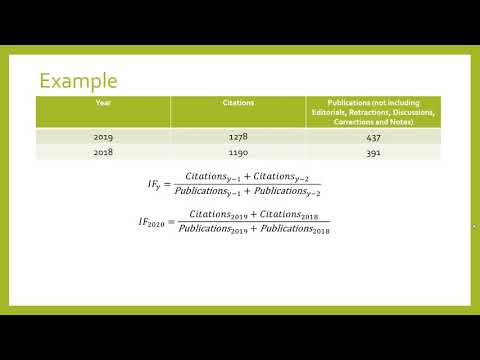
The IF of a journal is calculated by this database by taking two years the publication history of the journal divided by the total number of citations of a single year,

For example: If the journal has an impact factor of 5 in 2019, that means all the articles published in 2017 and 2018 have, on average, 5 citations each during that period.

The IF is used to compare the journal of a specific field not in the allied field and generally represent the statistical citation of that journal in the previous year means the IF of a journal in 2020 means the database of 2019.

Impact Factor will continue to be important while being criticized by others but it will have to grow and evolve within the system, the author level metrics, institutional level metrics; article-level metrics will ensure that these evolutions happen and if editors, editorial boards, or even authors can significantly self-cite the publication thereby affecting the IF.

Read: What Are Citation Metrics And Why Are They Important

Read:What’s i10-index? | How to calculate i-10 index for free

Role of Impact factor in Research publication

If you publish your research in a quality journal with a high IF, you will be able to get more citations for your paper as a result your citaion increase.

  • This is exactly what the impact factor is for, as well as giving your paper some value when you do your background research an communicate with others.
  • Currently, researchers are very keen on publishing their papers in journals with a high impact factor.
  • This is because they are evaluated for papers published in journals with a high impact factor and no intention from the scientific community of the same evaluation for papers submitted to any other journal.
  • Before submitting a paper, you should ensure you check the journal’s IF as it may adversely affect your research career.
  • A new journal will not get a place in the JCR database until after two years of existence and they would not have any factor because they are not getting cited in that database of research papers published.
  • It is important not only to publish your research papers in a new journal, but also to publish them in a journals that have a high impact factor as compared to other journals, which is a good is a good sign.
  • A good impact factor is one that is five or highe and higher the impact factor, the better the quality of your article will be.
  • If you publish a paper with a high impact factor today, you can expect to have a good number of citations in the future.
  • This will help you gain a greater degree of quality in the future, which will result in an increase in your increments or job status which is directly determined by the impact of your research.

Wrapping Up

This is all about this article and hopes these tips and tricks of impact factor calculation help you in your research and research journal discovery before publishing in a suitable research journal,

KressUp is an online learning platform, which brings novel articles from time to time, stay connected.

Please share and subscribe to our website, so that it can reach all people in need, and for more E-content, for research support, you can find it on our website or you can also write us an email for a free consultation.

Please feel free to share this article with other, if you like this

Related article:

General FAQ related to Impact factor in Research publication

Q 1. What is the significance of IF in Research Publications

An impact factor measures the importance of a journal by counting the number of times selected articles have been cited.

Q 2. Is IF really that important?

The impact factor of a journal measures how often its “average article” is cited and its importance relative to its peers.

Q 3. Does the publication matter to the IF of a journal

There are a number of journals that publish a lot of review articles and that have a high impact factor.

What’s Journal Quartile and Journal Ranking

if you are searching for Q1, Q2, Q3, and Q4 for your publication and not getting any information

you are on the right track because in this article we are going to explain What’s Journal Quartile and Journal Ranking

our guarantee is that after finishing the article in detail you know the difference between Q1, Q2, Q3, and Q4 and the rank of a research journal’s positions in that.

if you feel any difficulty in your research journal and journal find kindly email us

all information and data compiled in this article are gathered from different authorized sources like  JCR and SJR etc after a critical review of the literature.

Read: What Is A Literature Review And Types Of Literature Review

A quartile is the ranking of a journal or paper definite by any database based on the impact factor (IF), citation, and indexing of that particular journal. It can divide into four different quadrants starting with Q1, Q2, Q3, and Q4.

Q index simply means quartile which is the ranking of any journal that belongs to a specific or particular field of discipline and is also known as the parameter of measuring or ranking a journal.

First of all, usually, all indexing agencies are going to arrange all journals by divide into four different quads depending on the quality of the journal and the citation received.

The quartile rank and journal impact factor percentage published by any indexing agency yearly rankings of science and social science journals, in any subject categories relevant to the journal based on Impact Factor (IF) data.

Hence the quartile rankings are therefore derived for each journal in each of its subject categories according to which quartile of the impact factor (IF) allocates that this journal occupies for that subject category and this defined the ranking of the journal.

Read: What is the impact factor of the best journal in Research

Quartiles Ranking based on IF distribution

  • Quartile 1(Q1): The first position of the top 25% of journals in a particular category are placed in this category (top 25%)
  • Quartile 2 (Q2): The middle-high position subsequent occupied by 25% of Journal after quartile 1 falls under this category (between the top 25% to 50%)
  • Quartile 3 (Q3): The middle-low position next 25% of Journal titles after Q2 fall under this category (between 50% to 75%)
  • Quartile 4 (Q4): The last or lowest position following the 25% Journal title of a selected field will fall under this category (between 75% to 100%).

In addition to the impact factor, citations, indexing the ranking of journals in each subject category are divided into quartiles by JCR and SJR. These quartiles rank journals from the highest to the lowest position in the scientific field.

What do you mean by Journal Quartile?

If you are a Ph.D. student or teacher, then you are lucky to be attached to a University Research System where you have access to the web of science database where they can easily find this Quarter of Journals

But, what about students and researchers who do not have access to websites there is still an easy way to do this provided that they are aiming for a good journal to publish their research.

Many times people get confused when they publish in Q1, Q2, Q3, and Q4 they are referring to the quarter stated on a similar website. We are here with you to show you the right way and how we can do that easily

For your research assessment ranking, you find the quartile in the web of science where you will need access to Thomson Reuter’s Journal Citation Report (JCR) in the web of science database to identify the portal of the journal but unfortunately, we sometimes don’t have access to this JCR part in the web of science.

I’m going to show you an easy way how we can do this by just looking at the journal’s website

Let’s explain with an example, if you want to find out the information about the quad tile in Thomson Reuter’s Journal Citation Report (JCR) and as you all know that JCR is closely related to the web of science and if you are looking for a Journal title you can simply go to JCR and don’t have any idea about the Journal that you want to publish.  

But you can simply click on browse by category then they’re going to provide you the list of Journal in JCR from here you simply choose your category for example if you want to search for Journal of science then you can simply click on the number of Journal in science and see all the Journals. 

Now how do you want to identify the quartile information then you can scroll down and you’re going to see a group tank of Journal titles available.

Let me explain to you about this list once you have chosen the category they’re going to show all the titles under that specific category and this list is actually according to the number of Journal quality as you know the Journal impact factor (IF) distribution which is decided based on an average number of citations received by the journal within the last two years period.

If the citations of a Journal or paper were higher and better then they’re going to rank the Journal high and respectively improve the Journal quality.

If you want to see the quartile you can simply go here and clicks then they’re going to provide you with the option where you can choose which quota you want to see in Q1, Q2, Q3, and Q4 respectively

For example, if you want to see only Q1 Journal then you click Submit and they’re going to list down only fertile one Journal representing 25% of the best general in this field and you can choose the same if you want to go to Q2, Q 3, and Q 4 rank respectively.

If you want to further, explore any of the journals here you can simply click on the title then you’re going to see the detailed information about that journal and get all information about a specific journal and this is the quad information.

Wrapping Up

This is all about this article and hope journal quartile ranking information helps you in your journal-finding task at the time of research paper submission to a suitable research journal

KRS is an online learning platform, which brings novel articles from time to time, and stays connected.

Please share and subscribe to our website, so that it can reach all people in need, and for more E-content, for research support, you can find it on our website or you can also write us at info@kressup.com for a free consultation.

Note: Different indexing metrics i.e., SCImago Journal Rank, Science Journal Rank, Social science journal rank, Scopus journal rank, etc. has a different policy of calculating the impact factor (IF) and citation and simultaneously modification in the quartile ranking.

If you find this article useful, please share it. 

Related Articles:

General FAQ related to journal Quartile and Journal Ranking

Q 1. What is Quartile

Is a journal ranked by a database based on its impact factor (IF), citations, or indexing?

Q 2. How many types of quartiles there

Starting with Q1, Q2, Q3, and Q4, it can be divided into four different types based on journal rank.

Q 3. How decided the quartile rank

A journal’s quartile rank and impact factor percentage published by any indexing service